
Has this ever happened to you?
You learned a new trading strategy that is “proven” to work. You’re excited and can’t wait to try it out.
You put on your first trade… BAM. A winner.
Second trade… BAM. Another winner.
You’re killing it!
5 trades in a row and no losses. Who would have thought, trading is this easy?
Then… something happened.
You had your first loss…
Then your second loss…
You take a deep breath and tell yourself… “this nightmare will soon be over”.
And… another loss!
The next thing you know, you’ve given back all of your profits, and more.
Wait, what’s happening?
Why has my trading strategy stopped working?
Do forex strategies stop working?
Now:
If you’re one of them, then today’s lesson is for you. Read on…

The 3 vital ingredients every profitable trader needs to have
In order to be a consistently profitable trader, you need these 3 things:
If you’re missing any of it, you will not make money in the long run.
Watch this video below to learn more:
Now…
Some traders would argue that all you need is risk management and trading psychology.
But that couldn’t be further from the truth.
Let me explain why…
Imagine:
You’re going to the casino to gamble.
You can have the best risk management and trading psychology.
But the thing is…
If you don’t have an edge over the house, do you think you’ll make money in the long run?
Heck no!
And it goes the same for trading.
You can have the best risk management and trading psychology. But without an edge in the markets, you’ll still be a consistent loser.
Now, re-read the previous sentence, it’s important.
Your trading strategy doesn’t have an edge in the markets
I know it’s a bitter pill to swallow.
But the reason why your trading strategy doesn’t work is that you don’t have an edge in the markets.
Here’re a couple of reasons why…
Applying what you read in trading books without further consideration
I’m sure you’ve read countless trading books teaching you the Head & Shoulders (H&S) pattern, and it’s a sign of market reversal.
But… does it give you an edge in the markets?
Just because a textbook says so?
Just because a guru says so?
Come on. Your money deserves more respect than that.
Blindly following someone’s trading strategy
Log on to any trading forums and you’ll see countless trading strategies being shared. It’s a buffet spread and you’re spoilt for choice.
But again, you’re faced with the same issue.
How do you know that someone’s trading strategy has an edge in the markets?
Based on trust?
Based on testimonials?
Based on a snapshot of his P&L?
Now…
You’re probably freaking out right now.
But don’t worry, over the next few sections I’ll give you practical tips & tricks on how to find your edge in the markets.
For now, just understand that blindly trading chart patterns and following someone’s strategy isn’t the best solution.
Let’s move on…
The law of large number has fooled you
Well… maybe your trading strategy has an edge in the markets.
But the reason why you’re not consistently profitable is that you don’t understand the law of large number.
Wait, what’s that?
The law of large numbers is a theorem that describes the result of performing the same experiment a large number of times.
According to the law, the average of the results obtained from a large number of trials should be close to the expected value, and will tend to become closer as more trials are performed. – Probability Theory
This means…
It’s impossible to conclude whether your trading strategy works because your results are random in the short run, and will be closer to its expected value in the long run.
You need a large number of trades (at least a 100) before you can come up with anything conclusive.
Even with a 60% win rate, you have a 1% chance of losing 10 trades in a row.
The infographic below explains it:
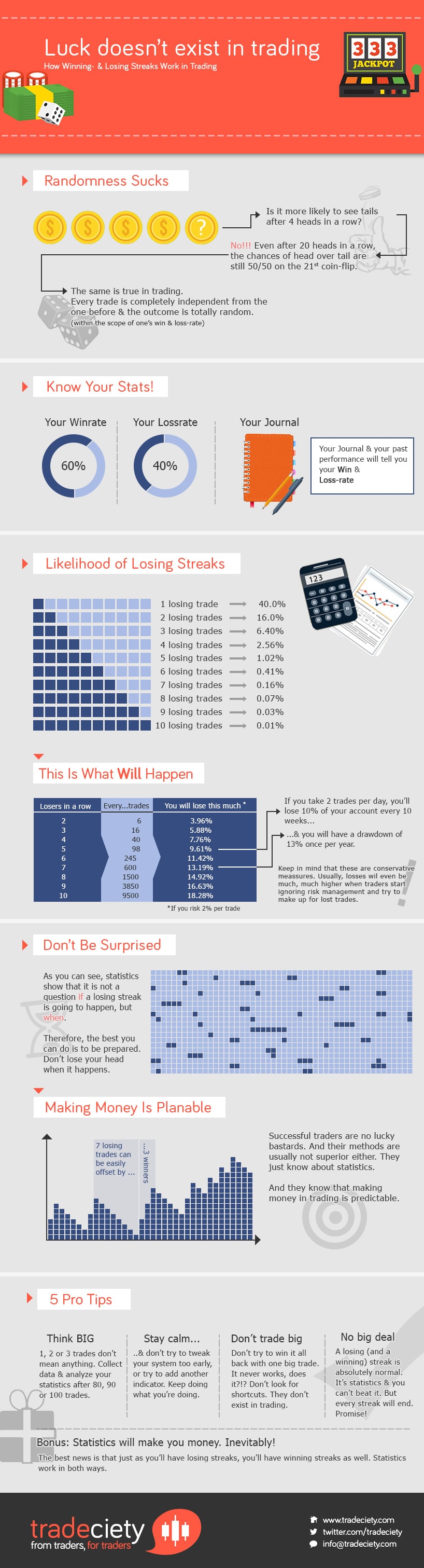
Image from Tradeciety
You don’t understand your trading methodology
This is important.
Before you adopt any trading strategy, you need to understand the methodology behind it.
Remember… methodology comes first, strategy second.
Think of it as a father and son thing. One father can have many sons, but a son can only have one father.
And it’s the same for trading. A trading methodology can have different strategies, but a strategy is based on a trading methodology.
Now, why is this important?
Because if you understand your trading methodology, then you’ll know:
- What market conditions are favorable for you
- What market conditions are NOT favorable for you
And this can turn you from a loser trader, into a winning trader. Let me explain why…
An example:
In favorable market conditions, your trading strategy results in a gain of 10%.
In poor market conditions, your trading strategy results in a loss of 12%.
And because you can’t differentiate between favorable and poor market conditions, you trade both conditions which nets you a loss of 2% (10 – 12).
Now…
What if you could differentiate between good and poor market conditions, would that improve your trading?
Instead of losing 12% in poor market conditions, you avoid it totally and focus only on favorable market conditions.
In return, you net a gain of 10%.
You’ve now turned from a losing trader into a winning trader because, you know when to stay in, and when to stay out of the markets.
Can you see how important this is?
How to find out if your trading strategy has an edge in the markets
I believe one of the biggest question you have is…
Does my trading strategy has an edge in the markets?
Here’s the thing:
Nobody knows whether your trading strategy has an edge. The only way to find out is, to record down your trades and let the data speak for itself.
These are the metrics you need:
Date – Date you entered your trade
Time Frame – Time frame you entered on
Setup – Trading setup that triggers your entry
Market – Markets you’re trading
Lot size – Size of your position
Long/Short – Direction of your trade
Tick value – Value per tick
Price in – Price you enter
Price out – Price you exit
Stop loss – Price where you’ll exit when you’re wrong
Profit & Loss in $ – Profit or loss from this trade
Initial risk in $ – Nominal amount you’re risking
R – Your initial risk on the trade, in terms of R. If you made two times your risk, you made 2R.
An example below:

After recording about 100 trades…
The data will speak for itself and you’ll know whether your trading strategy has an edge in the markets.
If your trading strategy doesn’t have an edge, then you need to find a trading methodology that works.
And that’s what you’ll learn right now…
How to find proven trading methodologies
You’re probably wondering to yourself… “how do I know if a trading methodology works?”
These are some things to look out for:
- Backed by academic research
- Hedge funds who adopt a similar approach
- Statistical evidence that validates it
- Based on the market’s price action
Now, let’s look at 3 proven trading methodologies…
1. Trend Following
This is a trading methodology that seeks to capture trends across all markets.
The reason it works is that…
Markets are driven by emotions, greed, and fear. When either side is in control, there will be a trend, and Trend Followers can take advantage of this phenomenon.
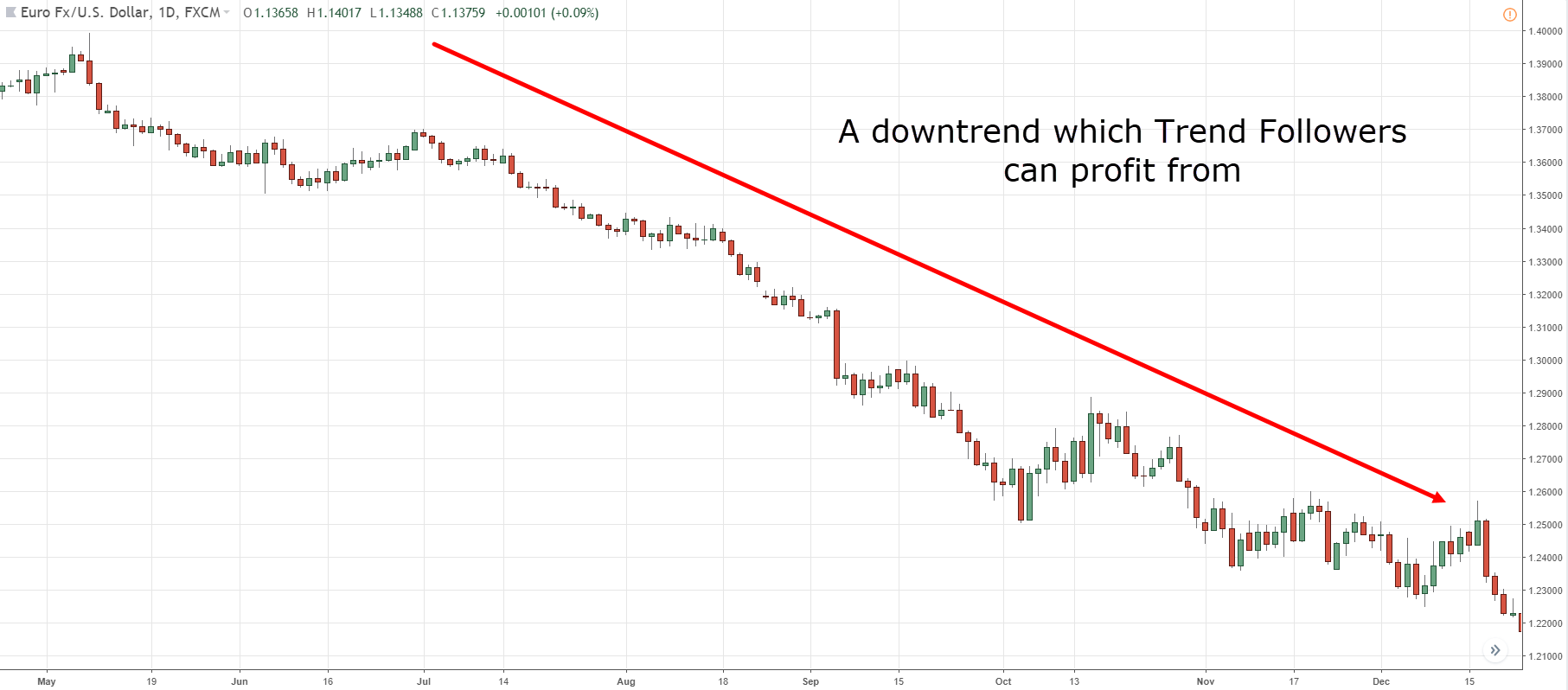
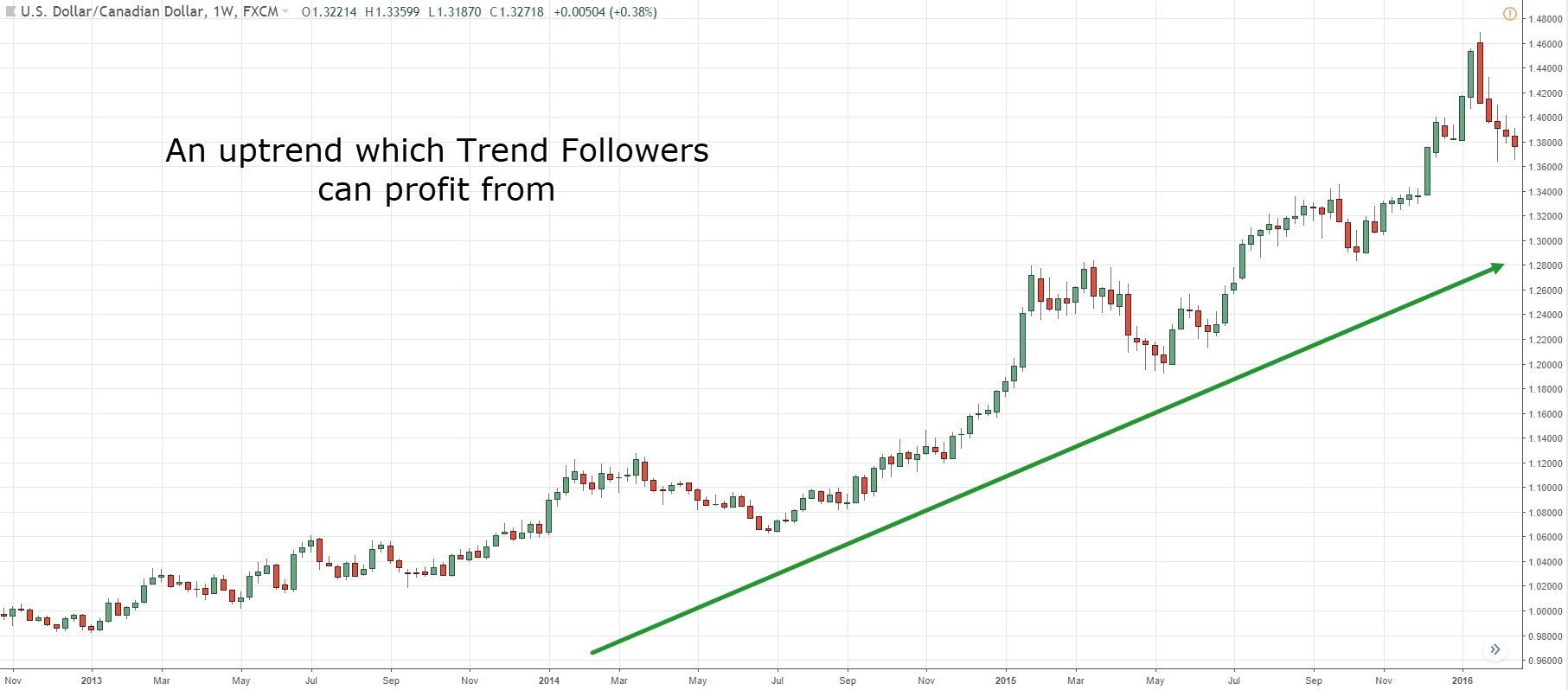
I absolutely believe that price movement patterns are being repeated. They are recurring patterns that appear over and over, with slight variations. This is because markets are driven by humans, and human nature never changes. – Jesse Livermore
Here’re a few pieces of research that validate Trend Following:
- Studies by M Potters proves that Trend Following is profitable over the last 200 years
- Studies by Kathryn M. Kaminski validates that Trend Following thrives during crisis periods
- Following the trend by Andreas Clenow explains how hedge funds and professional traders have been consistently outperforming traditional investment strategies
2. Profiting from “trapped” trader
Trading is a zero-sum game. If you want to make a profit, then someone else has to lose.
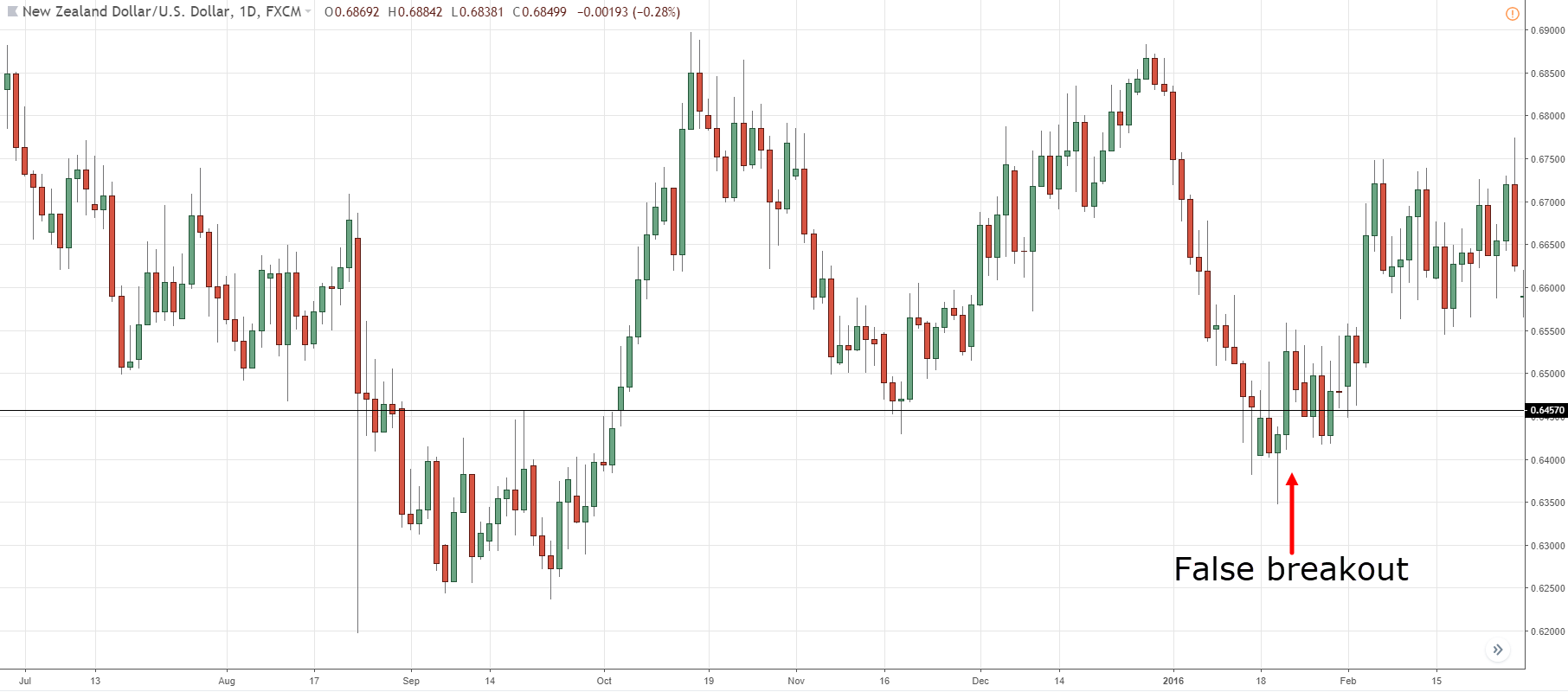
For a trader to lose, his stop loss has to be triggered. One way to go about it is to trade a false breakout.
An example:
When price trades below support, you can expect breakout traders to get short.
The interesting thing is…
If price closes back above support, these breakout traders will start to cut their losses. This results in buying pressure to fuel further price advance.
A proficient trader can take advantage of this phenomenon by going long, in expectation of higher prices when breakout traders cut their losses. And this is how you profit from “trapped” traders.
Here’s an example:
 If you want to learn more, go read “trapped traders” by Lance Beggs.
3. Seasonal analysis
This trading methodology uses a large amount of data to find tradeable patterns in it.
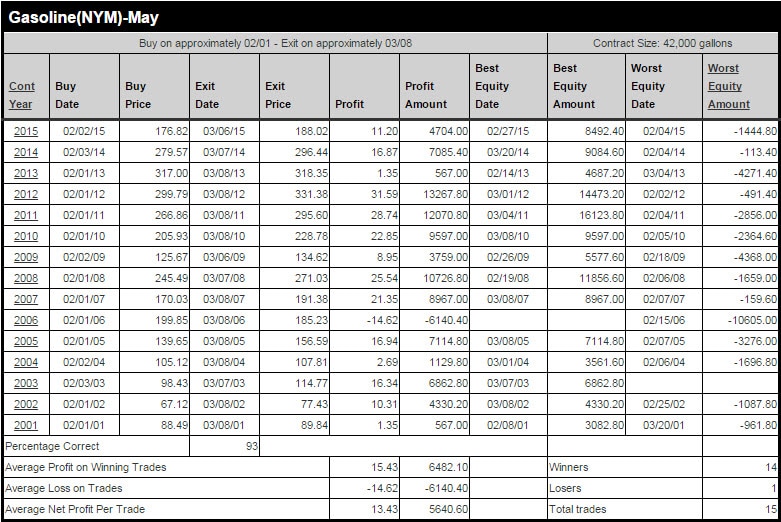
An example:
Since 2001…
If you go long Gasoline futures on 1st February and sell it on 8th March, you would get 14 winners and 1 loser.
Average profit of winning trades = 15.43
Average loss on trades = – 14.82
If you want to learn more, go check out Moore research center.
Let’s move on…
You need to know the strength and weakness of your trading strategy
Here’s a fact of trading.
No trading strategies work all the time. It’s your job as a trader to know which market conditions are favorable for you, and which are not.
Here’s what you need to do:
- Identify the objective of your trading methodology
- Define the favorable market conditions you’ll stay in
- Define the unfavorable market conditions you’ll stay out
Let’s look at it in details…
1. Identify your trading methodology
Let’s assume you adopt a Trend Following approach.
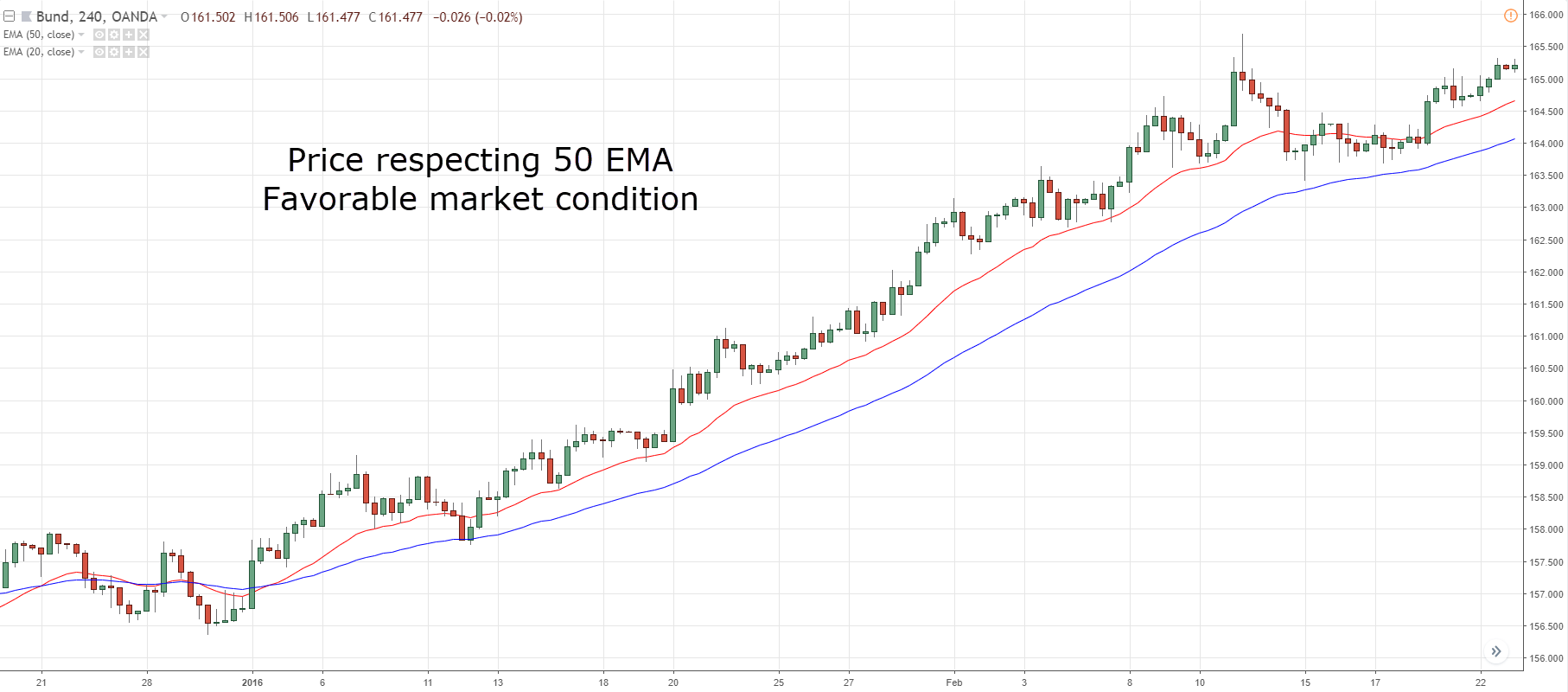
The objective is to capture trends in all markets while minimizing your risk. It works best in strong trending markets, and would suffer in range markets.
The next logical thing is to…
2. Define the favorable market conditions you’ll stay in
This has to clear and objective with little room for discretion.
For me, I define a strong trending market when price continues to respect the 50 EMA. This is a favorable market condition I want to stay in.
 Next…
3. Define the unfavorable market conditions you’ll stay out
How do you define it?
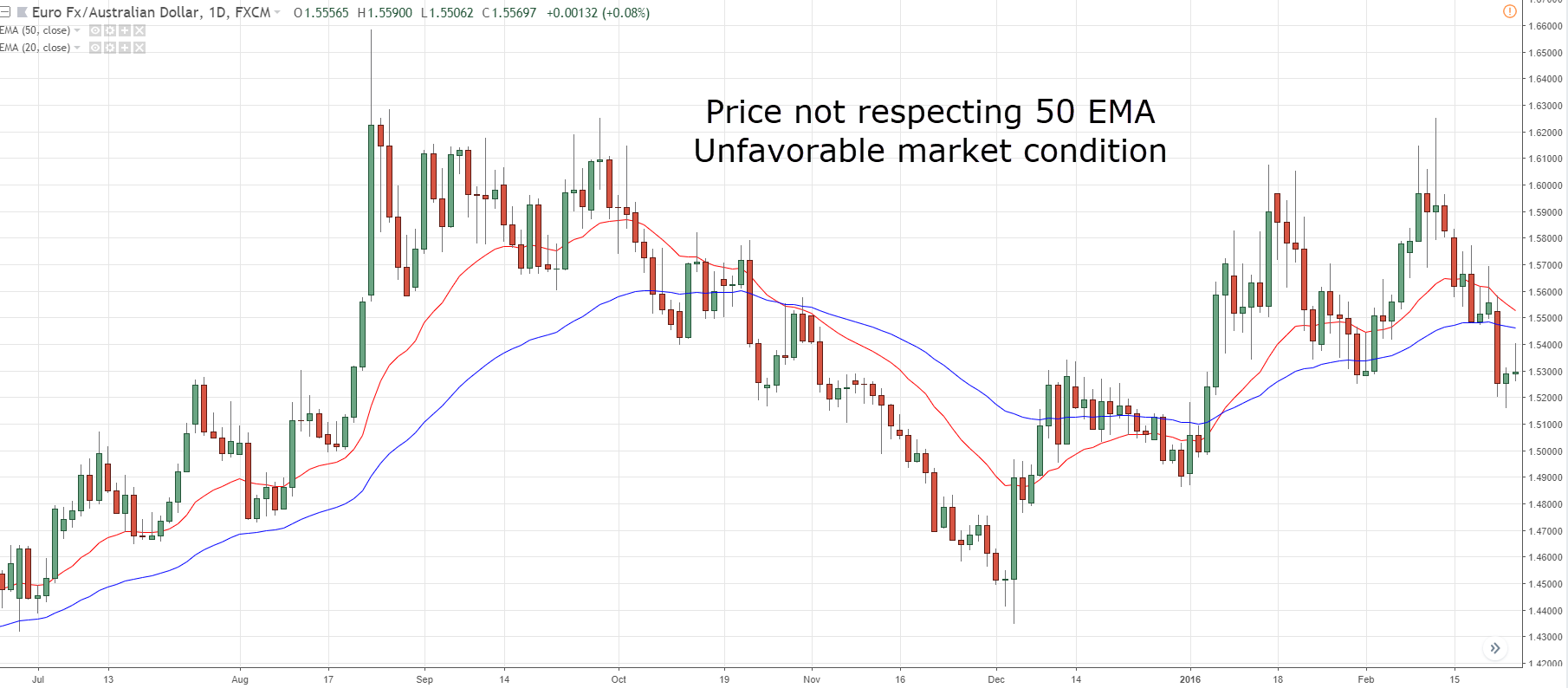
For me, if the price doesn’t respect the 50 EMA, then chances are it’s an unfavorable market condition. This is a market I’ll stay out of.
 By identifying market conditions you’ll stay in, and market conditions you’ll stay out, you’ll greatly improve your trading performance.
And may even turn a losing strategy into a winning strategy.
Now, be honest with yourself…
Does your trading strategy earn you a profit over time? If it doesn’t, then here are some questions to think about…
- Are you trading when market conditions are unfavorable?
- Could the law of large number be fooling you?
- Or perhaps your trading strategy doesn’t work at all?
And those will get you started on the right track.
Now, what I’d love to hear from you is this…
Were there any trading strategies that you’ve tried before that didn’t work out?
Leave a comment below and let me know.