
The fantasy genre in the 2000s was dominated by two franchises, as both Peter Jackson’s The Lord of the Rings brought the world of Tolkien to life on a grand canvas and Harry Potter began to capture the imagination of the globe. Naturally, the success of both led to imitators across the decade, all of which gave fantasy a resurgence that it hadn’t seen…arguably ever. Mainstream appeal of the fantasy genre at the time painted it as something for families and kids, but the decade had one film that fit the bill and had more in common with Heavy Metal magazine than a story about Hogwarts.
Beowulf may not be the oldest story in the world, but that it still survives is something of a miracle. Like The Odyssey before it, though, this tale of a daring Scandinavian hero who fights monsters and saves kings has been the basis for countless interpretations (including movies) over the years. When Robert Zemeckis turned it into a film that was released in 2007, though, released 19 years ago this week on November 16, it was just the latest in a long line of takes on the material. This version of Beowulf didn’t look like any other adaptation, though, and it made even wilder changes to the story itself.
Robert Zemeckis’ Beowulf Took Some Wild Swings
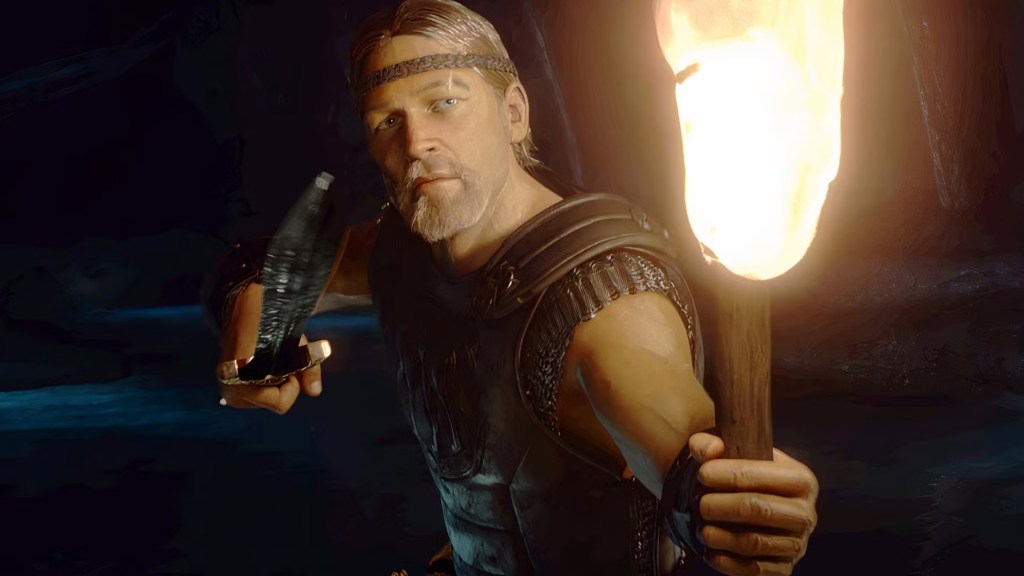
In the 2000s, filmmaker Robert Zemeckis got stuck in a pretty specific niche, making motion capture movies that put layers of animation on top of live-action performances. Though the uncanny valley of The Polar Express remains the most spoken-about element of this trio of films, the ambitious storytelling ideas of Beowulf have proven to be the most interesting creative decision across them, and that’s on top of distinct action and atmosphere that make it a film worth revisiting decades later.
The structure of Beowulf is pretty simple: the monster Grendel attacks King Hrothgar and his village; Beowulf eventually arrives to take down the beast, freeing the Danes from the torment of the monster; and years later a dragon attacks after Beowulf has become the king himself, with the titular hero dying to save his people one last time. Every version tells a variation of this story, but Robert Zemeckis’ take brings some twists to the material.
A mid-point twist in Zemeckis’ Beowulf reveals that King Hrothgar (Anthony Hopkins) was previously seduced by Grendel’s mother (Angelina Jolie), not only implying that the only reason he became king was because of his deal with the “devil” but that their relationship resulted in the birth of Grendel, the monster that plagued his house. This reveal is built on top of the other big surprise, where Beowulf (Ray Winstone) falls prey to the same seduction and makes a deal with Grendel’s mother to secure his own future as King.
The changes to the story don’t even end there, though, as the big final act, which has traditionally just been about Beowulf confronting the dragon in his old age, brings further layers to the twist. Not only is it confirmed that Beowulf has no offspring of his own following his… rendezvous with Grendel’s Mother, but the dragon is actually the result of that same tryst. It brings depth to the conflict, delivering a generational repetition of the failure of leaders and how the temptation of power creates literal monsters. Even the finale of the film shows the same thing, with Wiglaf, Beowulf’s best friend, facing Grendel’s mother after his death and trying to resist her temptation. Again, all invented for the film, and standing in stark contrast to basically every other interpretation.
Beowulf Holds Up Even With Funny Animation
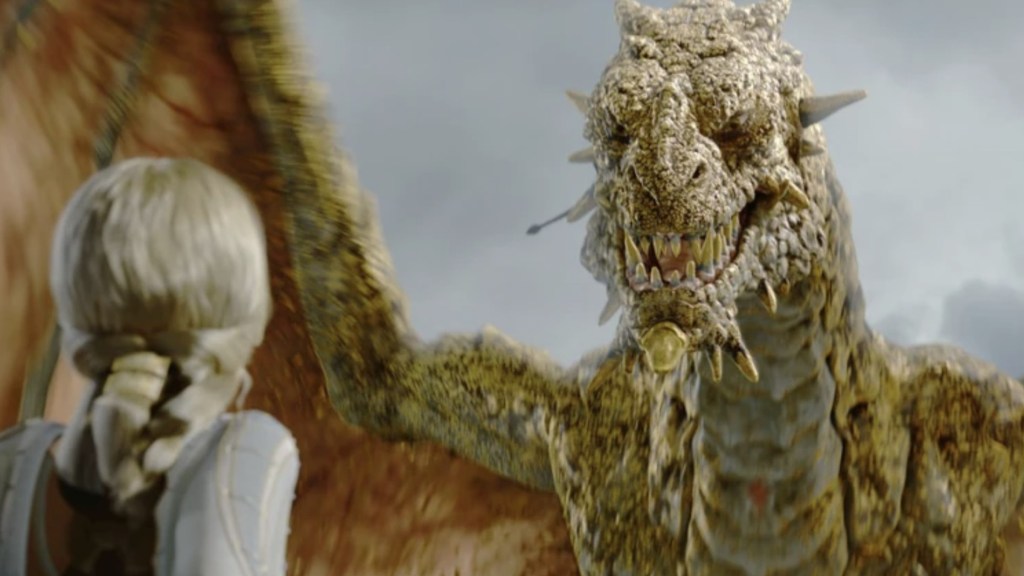
These changes are pretty surprising for English majors who have become intimately familiar with the larger story machinations of Beowulf, but they really shouldn’t be. In the script for Beowulf, written by Neil Gaiman & Roger Avary, the changes carry an implication that all the monsters were actually born from decisions by other characters like Hrothgar and Beowulf, adding depth to a fantasy tale that previously felt a little shallow in its monster-fighting mythos.
At the time of release, the changes to Beowulf‘s larger story were somewhat controversial, seen as change for the sake of change, but the reality is that it gave the story something far more interesting. By flipping the machismo of Beowulf the character, and the subtext of the story, into a narrative that reveals the fallout of masculine-forward thinking and how the infrastructure of leadership can be built on a crumbling foundation built on lies. Beowulf has more than monsters; it adds meat to its bones.
There’s one problem with Beowulf, and it’s not the story changes; it’s the look. Even though the film has a clear improvement over the animation style found in The Polar Express, there’s a stiltedness to how it looks, almost like an aged Warcraft cinematic from Blizzard. To new audiences, this may be an insurmountable summit to get over in order to enjoy everything else that it has to offer.
Underneath the dead eyes and the fake skin that is found, though, Beowulf offers a rich take on an aged story and offers distinct filmmaking sensibilities that are staged impeccably. Robert Zemeckis is an Academy Award-winning director, and even though the films he’s best known for aren’t ones with massive action scenes and throw downs with monsters, Beowulf proved that he knew how to make it work on the big screen. It’s been almost twenty years since this version came out, which is nothing compared to the lifetime of Beowulf as a story.