
There’s a moment in every season of a Star Trek show where something clicks and feels monumental, a game-changer that makes everything that happens next feel different. Being the subsequent chapter in the series after the original crew hung up their phasers, Star Trek: The Next Generation had many of those defining events but some were more significant than others. These episodes were the equivalent of a butterfly effect for much of what would come later, although many of these were more explosive than a gentle insect flapping its wings.
These aren’t necessarily the best episodes of every TNG season, but the ones that had a big mark on the series and in some cases affected the entire franchise. Sometimes they influenced future storylines, gave us solutions to dangling questions and others were impactful in quieter ways that highlight why Trek is one of the best parts of the sci-fi genre. They’re also still a lot of fun to watch and remind fans of how good we had it during this syndicated era that kickstarted a broader future that fans continue to enjoy decades later. Just don’t forget to reverse the polarity after you finish this list!
Season 1: Skin of Evil
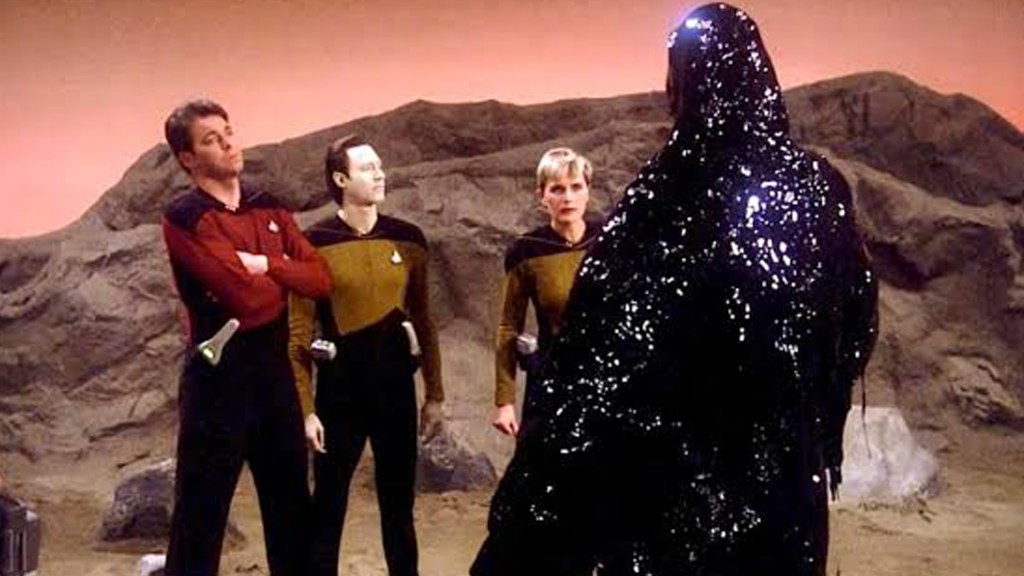
“Skin of Evil” did something unthinkable in Star Trek by killing off a member of the bridge crew and main character in the show. This shocking decision was made due to off-screen drama, as Denise Crosby was upset with the direction of Tasha Yar’s character. The first season was a rough time for the show’s female leads, with Marina Sirtis almost quitting over similar frustrations and Gates McFadden being fired due to her problems with the creative side of the show. With the writing on the wall for Lt. Yar, TNG used the opportunity to prove that nobody was safe, and that even those not wearing a red shirt could be in mortal danger.
Two shows in the modern era of Trek killed off major crew members: Captain Philippa Georgiou in Discovery’s season premiere (only to be brought back as a mirror version a few episodes later), and chief engineer Hemmer succumbing to his fate in the penultimate episode of Strange New World’s first season. While they were incredibly dramatic and poignant, nothing can beat the surprising first time of seeing a main character attacked and tossed to the ground like a sack of potatoes by a pile of sentient ooze. It was brutal and unexpected, but this horrible act added more humanity to Data — something that would come into question very soon.
Season 2: Measure of A Man
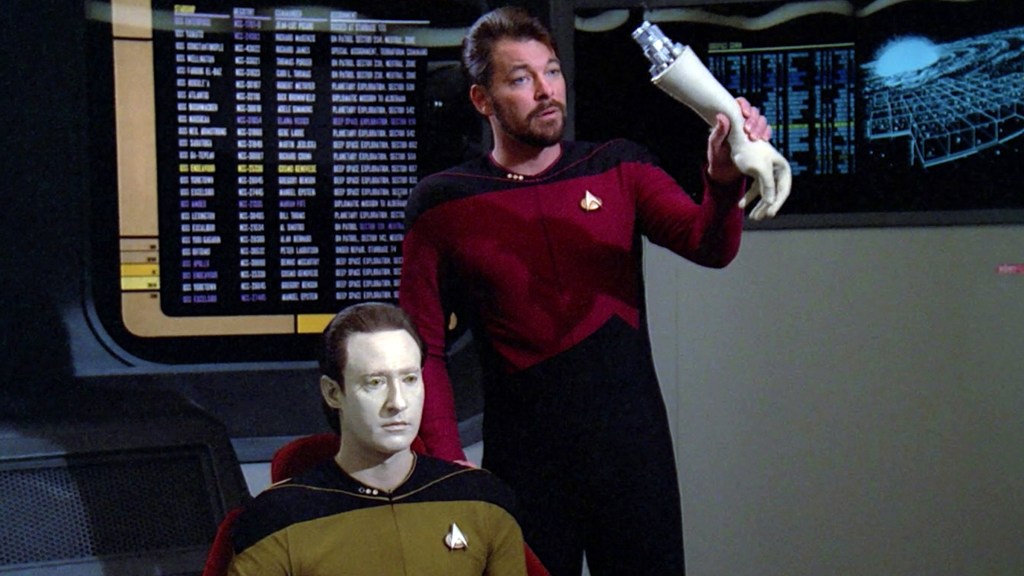
Star Trek has an outstanding reputation for their courtroom episodes, and “Measure of A Man” is an example of one of their finest. Data is the one on trial, and the case is whether or not this android is considered a sentient being or the property of Starfleet. Making it more dramatic, Cmdr. Riker is the one prosecuting his fellow crewman, going to great lengths to disprove the validity of his friend as a lifeform. But this episode isn’t all about the drama here, although it helps a great deal.
The heart of “Measure of A Man” is a metaphor for several different things, particularly defining what human consciousness is. It’s a classic question for the sci-fi genre and one that remains so fascinating that this franchise has continued to press it with episodes like Voyager’s “Flesh and Blood” and Strange New World’s “Ad Astra Per Aspera.” Other series in the genre like Westworld and Black Mirror ask similar questions about the rights of artificial beings while also using it as a way to examine even the most technologically advanced societies will still have biases and broken systems that require uncomfortable conversations to resolve.
Season 3: Yesterday’s Enterprise
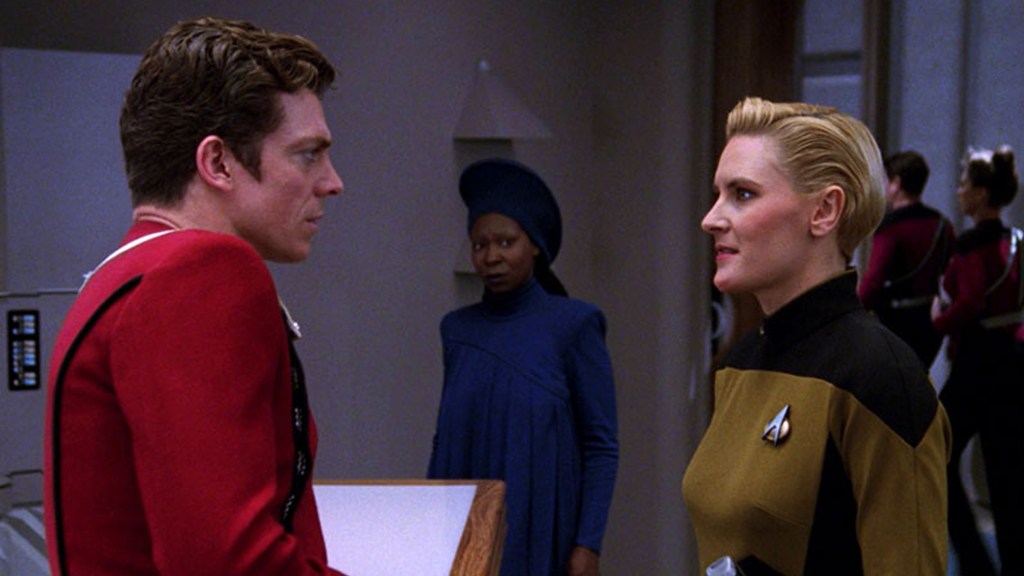
Temporal shenanigans are commonplace for Star Trek series, and TNG was no exception. Among those was “Yesterday’s Enterprise,” which gave Trek fans a piece of unknown lore about a different era of the familiar ship and a second chance for a character who left the show too early. A rift in space causes a displaced Enterprise-C to emerge, upsetting the timeline and changing everything about the Enterprise-D, including reviving Tasha Yar as a member of the bridge crew. The only person aware of this peculiarity is Guinan, who must convince Picard to set things right while Yar fights for a second chance at a meaningful life in a time and place she doesn’t belong.
The Enterprise-C was a missing link between TOS and TNG, so it was exciting to finally see what came between these vessels — and what a beauty she was! But more importantly, “Yesterday’s Enterprise” undid a great wrong from the first season when Yar was killed off. Even though this version of Yar has nothing to do with the rest of this series, it was the happy ending her character deserved. Not to make this list all about Denise Crosby, having a Guinan-centric story was unusual and gave Trek fans more info about her character along with showing us what could have been for the Enterprise if some events happened differently. This episode truly had it all in terms of great writing, big action and excellent characterization, and is a time-travelling favorite for many fans of this era.
Season 4: Best of Both Worlds (Part 2)
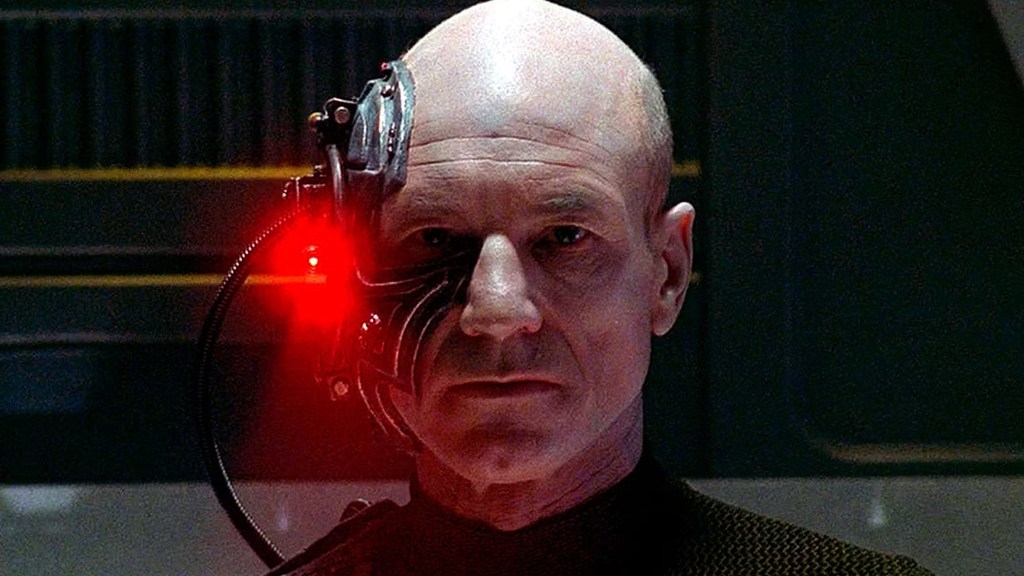
The season four premiere is one of the most impactful episodes of TNG with ripples felt in nearly every series that came after it. After being assimilated at the end of season three, Picard returns as Locutus, the spokesperson for the Borg who now have all of the tactical knowledge of the Enterprise’s captain and access to everything he knows about Starfleet and humans. This leads to one of the most catastrophic events in Federation history, the Battle of Wolf 359, where dozens of starships were destroyed and thousands of crew and civilian lives were lost.
Even after being rescued and dissimilated, the trauma of Picard’s action stayed with him through the rest of his life. The repercussions of this tragedy would be felt for years to come, being the impetus for the narrative start of DS9 and Sisko’s journey as well as making Starfleet’s battle against the Dominion difficult with a crippled fleet, the catalyst for First Contact, and a major part of the Picard series that would take many more paragraphs to detail but was felt on a personal level through Seven of Nine’s hardship due to anti-Borg bias. This was a defining moment for not only TNG, but one that links to countless other things we didn’t even touch on here that forever shaped the future of the Federation.
Season 5: Unification
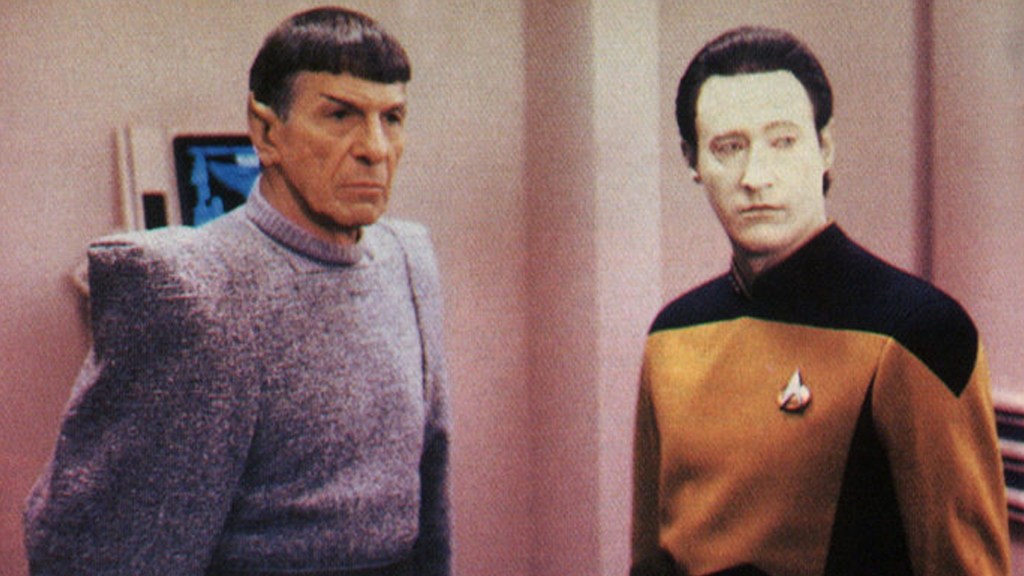
“Unification” was the culmination of events before TNG that brought us to a point earlier than the original series. Any signs of a healthy relationship between the Vulcans and Romulans were non-existant, siblings from the same mother who split over the idea of logic versus emotions. This two-part episode was a deep dive into the explosive political turmoil within this divided society, sending Data and Captain Picard onto the Romulan home world to meet a covert operative working from within to negotiate peace — Ambassador Spock. His efforts at “cowboy diplomacy” were motivated by the events of Star Trek VI, leading to a team-up of generations that results in foiling a Romulan invasion and the start towards unification between these warring people.
The feud between Vulcans and Romulans was legendary in lore, but TOS did very little with the emotional aliens. Up until this story, similar could be said about TNG’s use of them beyond a handful of episodes. Spock remarks that peace will likely not be achieved in his lifetime, but he chooses to believe in the process and continue his work on Romulus. It isn’t until Discovery’s third season when we find out what happened to Spock’s efforts in the aptly named “Unification III,” with the revelation that Vulcan was renamed Ni’Var and houses both species living side by side in peaceful coexistence.
Season 6: The Chase
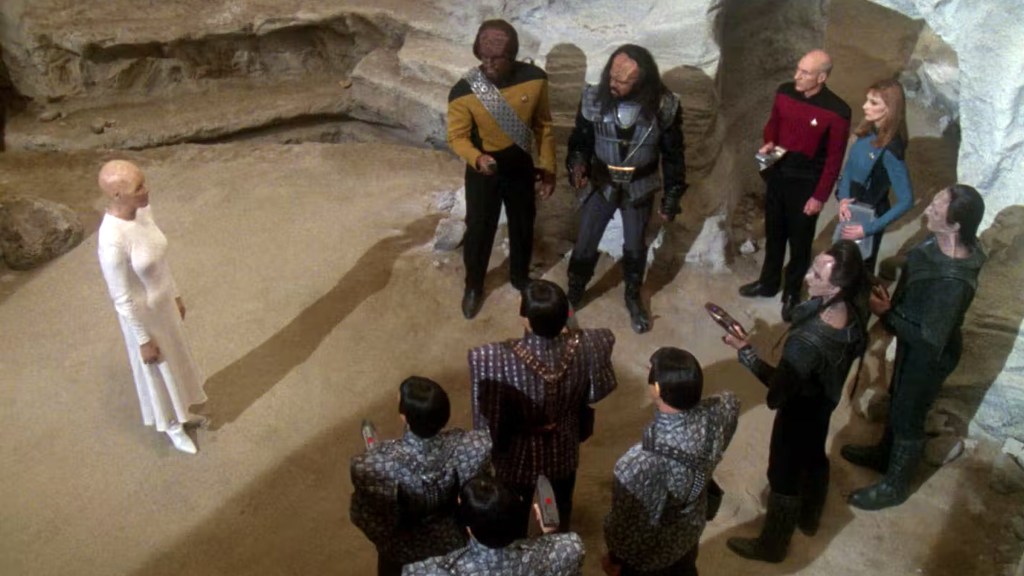
If you ever watched Star Trek and wondered why all the aliens kind of looked the same, “The Chase” has an answer. After his archaeologist mentor is murdered while en route to a very important dig, Picard finds out he was protecting files that lead to something very important. This revelation sets the Enterprise on a collision course with Romulans, Klingons and Cardassians, culminating in the discovery of an ancient alien progenitor responsible for the creation of all life in the galaxy by sharing their DNA to other planets. It’s a massive revelation that is essentially the origin story of every species in the entire franchise.
Deep Space Nine had just debuted a few months earlier, becoming the second Trek series during this era. Little did fans know then that this humanoid who appeared in The Chase would be the prototype for an entire species that would expand upon the ideas this episode introduced. Many consider this being to be the first Founder, changelings who roamed the Gamma Quadrant and run the Dominion. This theory is compounded by the fact that Salome Jens played by this character and the leader of the Founders who we first meet in DS9‘s third season. Regardless of how factual that is, “The Chase” resolved one of Star Trek’s greatest mysteries, demystifying the origin of every species who came before and after.
Season 7: All Good Things…
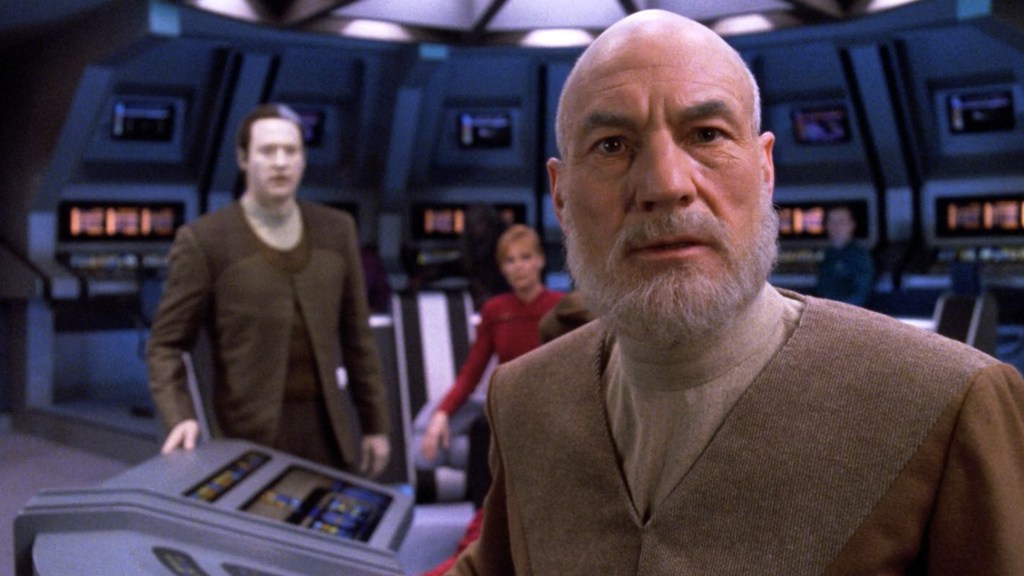
The final season of TNG had its share of eccentric episodes that made it seem like it was wandering the cosmos without any direction, but it course-corrected with the series finale “All Good Things…” While the series began with Q in “Encounter at Farpoint,” so too would it end with Q, who reveals that Picard — who has been simultaneously traveling back and forth through three different timelines — is the reason humanity will be destroyed by a strange growing anomaly. It’s a multidimensional mystery that takes viewers through a nostalgic trip into the past while giving a taste of one potential future (including an awesome refit Enterprise-D with three nacelles).
Picard solves the mystery but not before Q can give one final warning, reminding him that what he said in the pilot remains true – the trial never ends. That was true enough, as this episode finished the series with a bang, but this loose end with Q would take a few more decades before it was totally resolved in Picard (and then potentially restarted at the end of that series with Picard and Crusher’s son). But back in 1994, audiences had no idea if this trial would continue or not, and saw “All Good Things…” as a great way to wrap up loose ends while leaving possibilities open for the future. While an end to TNG was inevitable, this episode was an unwitting catalyst for something bigger that would take many years to become a reality, one that would give Trekdom something extra special and unforgettable.
Did we miss an episode of TNG that you think had a bigger impact on the series or franchise? Join the conversation in the comments and let us know.